Chawanmushi (Japanese Savory Steamed Egg Custard)
Chawanmushi is a silky Japanese savory steamed egg custard with chicken, fish cake, and mushrooms in a delicate lidded cup. It feels special yet comes together at home faster than you’d expect. I'll walk you through how to steam them with no special equipment for perfect results every time.
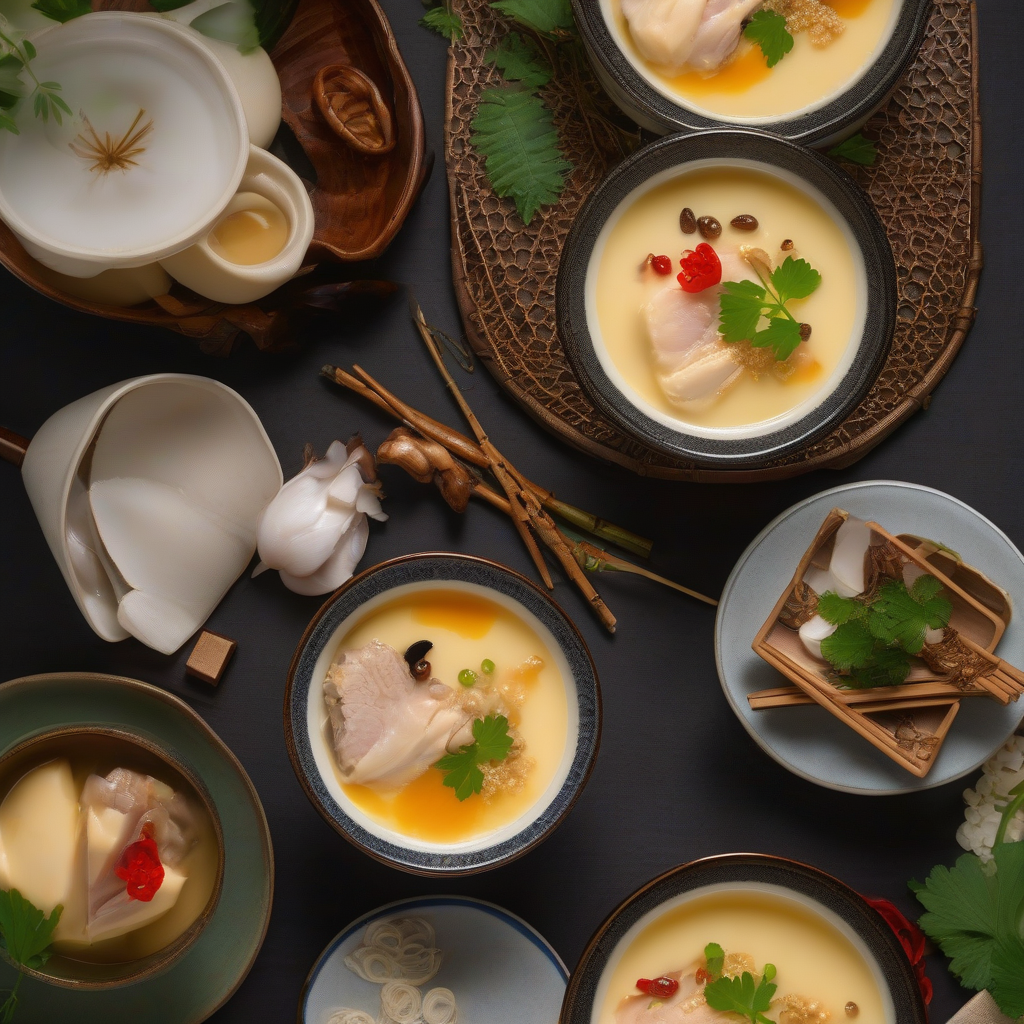 Foto: Just One Cookbook
Bahan-bahan
- 2 chicken tenders ((skip for vegetarian))
- 8 slices kamaboko (fish cake) ((thin slices; skip for vegetarian))
- 1.8 oz shimeji (brown beech) mushrooms ((roughly ½ package))
- 4 sprigs mitsuba (Japanese parsley) ((or 1 green onion/scallion))
- 8 g inkgo nuts ((pre-cooked; optional))
- 1 Tbsp sake ((for marinating the chicken))
- 3 large eggs (50 g w/o shell)
- 1¾ cups dashi (Japanese soup stock)
- 1 tsp mirin
- 1 tsp soy sauce ((use light-colored usukuchi soy sauce, preferably))
- ½ tsp Diamond Crystal kosher salt
Langkah-langkah
This recipe is based on chawanmushi cups that hold 200 ml each. The size and thickness of your cups affects cooking time. Do not choose cups with thick walls as the heat won‘t penetrate easily. Make aluminum foil covers if your cups don‘t have lids. You can find chawanmushi cups at JOC Goods.
Place the chawanmushi cups with lids in a large pot. Add enough water to the pot to reach halfway up their sides, then remove them. Cover the pot with a lid, bring it to a boil, and turn off the heat. Meanwhile, prepare the ingredients.
Gather all the ingredients.
Cut 2 chicken tenders into ½-inch (1.3 cm) pieces. Place in a tray or bowl, toss with 1 Tbsp sake, and marinate for 10 minutes.
Cut 8 slices kamaboko (fish cake) thinly. Trim the roots off 1.8 oz shimeji (brown beech) mushrooms and separate them into small clusters.
Loosely knot each stem of the 4 sprigs mitsuba (Japanese parsley). Alternatively, thinly slice the green onion if using instead.
Crack and weigh 3 large eggs (50 g w/o shell) in a measuring cup or bowl set over a kitchen scale. Multiply the egg weight by 2.5 to calculate how much dashi to use and add it to the eggs. For example: 150 g eggs x 2.5 = 375 ml dashi (egg-to-dashi ratio of 1:2.5).Nami's Tip: To measure the dashi, I zero out (tare) the scale and pour the stock directly into the eggs. I weigh and mix everything in a glass measuring cup for easy pouring later.
Add 1 tsp mirin, 1 tsp soy sauce, and ½ tsp Diamond Crystal kosher salt to the egg mixture.Nami's Tip: Add less or more seasoning for how much egg you used, as I based these measurements on an egg weight of 150 g. If you have it, use usukuchi soy sauce because it keeps the custard color lighter.
Whisk it all together until the egg whites and yolks are well combined.
Strain the egg mixture through a fine-mesh sieve into another bowl. Nami's Tip: Straining achieves a refined silky texture.
Add a single layer of chicken to the bottom of the cups. Add the shimeji mushrooms and optional ginkgo nuts.
Top with kamaboko and mitsuba (or green onion). Gently pour the egg mixture until the cups are 80% full, leaving the colorful top ingredients partly uncovered. You might not use all the egg mixture. Scoop up any air bubbles with a spoon or pop them with a bamboo skewer. Nami's Tip: Air bubbles create a rough texture on the cooked custard.
Bring the pot of water back to a boil and reduce to the lowest heat. Carefully lower the cups into the simmering water and cover them with lids. Cover the pot with the lid slightly ajar and keep the water at 176–194ºF (80–90ºC). Gently steam for about 20 minutes (see the next step to check doneness) or 15 minutes if you omitted the chicken.Nami's Tip: Please monitor closely, as the size and thickness of your cups affects the cook time. Do not boil, or the finished custard will not be smooth.
Insert a skewer in the center of the steamed custard. If clear liquid comes out, it's done. You can also tilt the cup to check if the custard is set, not runny. Once it's cooked, carefully remove the cups from the hot water. Nami's Tip: I removed the lids first and lifted out the cups with a hot plate gripper.
Place the lids back on. Serve the chawanmushi hot or warm with a small spoon.
Keep the leftovers in their cups and store in the refrigerator for up to 2 days. To reheat, steam for 2 minutes until warmed through.
Memuat komentar...