Chikuzenni / Nishime (Ayam Rebus dan Sayuran)
Chikuzenni or Nishime is a simmered dish of tender root vegetables and chicken seasoned with a flavorful broth. A home-cooking classic, it's also an important dish for the traditional Japanese New Year feast of Osechi Ryori served on New Year‘s Day. {Vegan Adaptable}
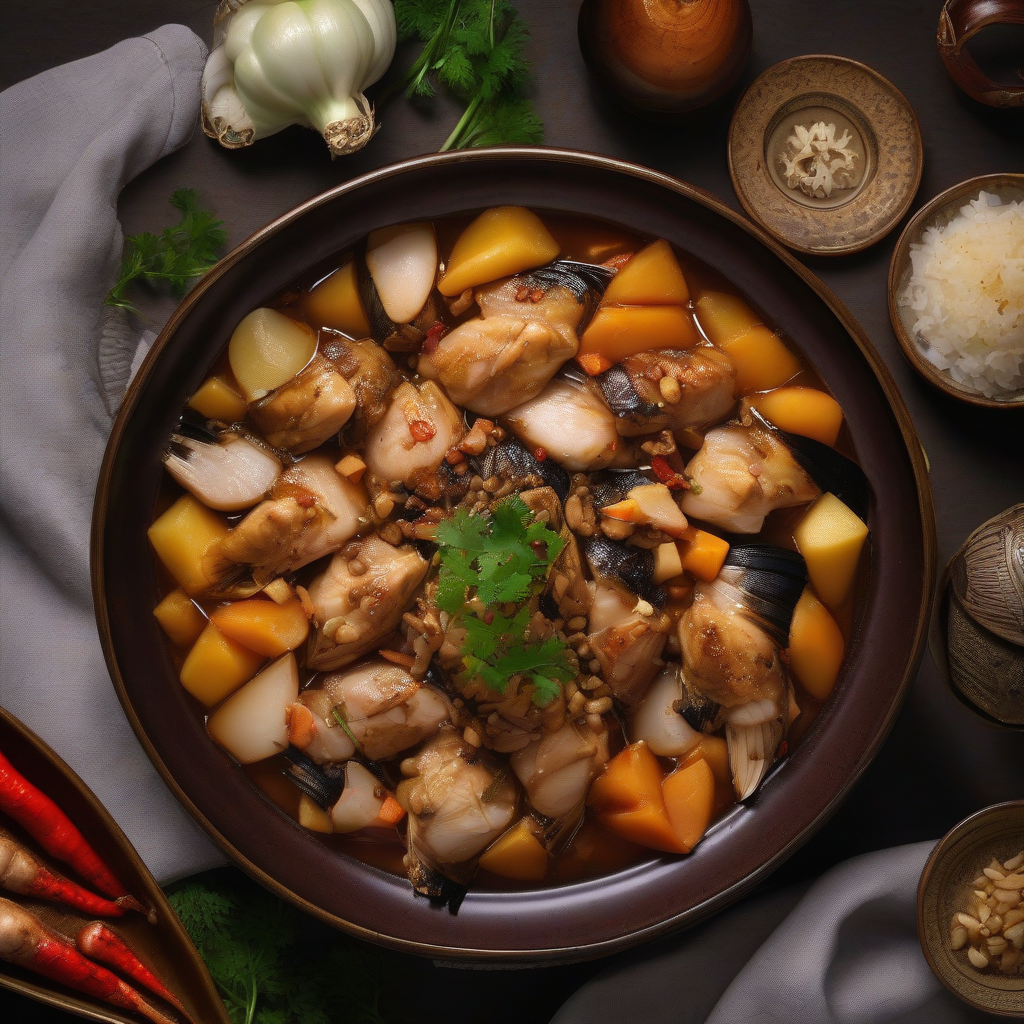 Foto: Just One Cookbook
Bahan-bahan
- 6 dried shiitake mushrooms ((1 oz, 30 g))
- 1 cup water ((for the shiitake mushrooms and shiitake dashi))
- ¾ lb boneless, skinless chicken thighs ((skip for vegan/vegetarian))
- ½ Tbsp sake ((for the chicken))
- ½ Tbsp soy sauce ((for the chicken))
- 5 taro (satoimo) ((9 oz, 250 g))
- ½ boiled bamboo shoot ((3 oz, 90 g))
- ½ g obo (burdock root) ((4 oz, 110 g))
- 1 lotus root (renkon) ((6 oz, 170 g))
- 1 Tbsp rice vinegar (unseasoned) ((divided; for soaking the lotus root and gobo))
- 1 carrot ((6 oz, 170 g))
- ½ block konnyaku (konjac) ((4.5 oz, 130 g))
- 10 snow peas ((1 oz, 30 g))
- ⅛ tsp Diamond Crystal kosher salt ((for the snow peas))
- 1½ Tbsp toasted sesame oil ((divided))
- 2 cups dashi (Japanese soup stock)
- 3 Tbsp sake
- 3 Tbsp mirin
- 1 Tbsp sugar
- 3 Tbsp usukuchi (light-colored) soy sauce ((or use 2 Tbsp soy sauce + ⅛ tsp salt))
- ½ tsp Diamond Crystal kosher salt
Langkah-langkah
If you will include this dish in your Osechi meal, I recommend cooking it 2 days before you plan to serve. For more helpful tips on planning your Japanese New Year feast, please read my A 5-Day Osechi Cooking Timeline blog post.
Gather all the ingredients.
Add 6 dried shiitake mushrooms and 1 cup water to a small bowl and soak for 20–30 minutes, or until tender and rehydrated.
After 30 minutes or so, squeeze out the liquid from the shiitake mushrooms (reserve the soaking liquid).
Cut off and discard the stems. Cut the shiitake mushroom caps into a hexagon (optional), which resembles a turtle shape and symbolizes longevity.
Strain the shiitake soaking liquid through a fine-mesh sieve. This is called shiitake dashi. It yields roughly ¾ cup. Set aside.
Remove the extra fat and cut ¾ lb boneless, skinless chicken thighs into slanted pieces using the sogigiri Japanese cutting technique: Angle your knife back and diagonally (nearly parallel to the cutting board), and then slice the chicken into 1½-inch (3.8-cm) pieces. Tip: This method creates pieces of equal thickness and increased surface area, which allows the chicken to cook faster and absorb more flavors.
Transfer the chicken to a medium bowl and add ½ Tbsp sake and ½ Tbsp soy sauce. Coat the chicken with the marinade and set aside.
Cut off the ends of 5 taro (satoimo). Then, peel the tough skin from one end to the other using a sharp knife. Tip: For taro, it’s recommended to peel the skin thick. It’s not considered wasteful to remove skin with more flesh attached.
Ideally, taro should resemble a hexagon (with six sides) from the top view.
Cut the taro in half and soak in water. You can rub them with salt to get rid of the sliminess, if you wish.
Cut ½ boiled bamboo shoot into 4 pieces lengthwise.
Cut the bamboo shoot pieces in half widthwise. If each piece is still bigger than bite-size, you can cut lengthwise in half again.
Scrape the skin off ½ gobo (burdock root) with the back of the knife. After rinsing, cut it into thin diagonal slices.
Prepare a bowl of 2 cups water and ½ Tbsp rice vinegar. Soak the burdock root in the vinegared water for 15 minutes.
Peel off the skin of 1 lotus root (renkon) with a vegetable peeler or knife. Then, cut the root in half crosswise. (Optional) If you wish to make hana renkon (lotus root flowers), you can use my tutorial.
The lotus root should resemble flowers after cutting the edges off.
Otherwise, to make simple slices, cut the lotus root crosswise about ¼ inch (6 mm) thick. Prepare a bowl of 2 cups water and ½ Tbsp rice vinegar. Soak the lotus root in the water for 15 minutes.
Peel 1 carrot and cut into ½-inch (1.3-cm) rounds.
Here, I‘ll show you how to cut the carrot into plum flowers (optional) using the Japanese cutting technique nejiri ume. Use a flower-shaped vegetable cutter and punch out a plum flower shape from the carrot rounds. Then, make a shallow incision (roughly ¼ inch or 6 mm deep) from the center of the flower to in-between the two petals.
Hold a knife parallel to one petal and make a diagonal cut from right to left in-between petals.
Repeat this process for all the petals and on the other side of the carrot slice.
Cut ½ block konnyaku (konjac) crosswise into slices about ¼ inch (6 mm) thick. To make tazuna konnyaku (optional), cut a lengthwise slit 1½ inches (3.8 cm) long in the center of each slice.
Then, tuck one end of the slice through the slit. Push it in; then, pull out the end from the other side. The konnyaku will now be twisted on either side of the slit to resemble horse reins. Pull gently on both ends so the slice lays flat. Repeat with the remaining slices.
Remove and discard the stem ends and tough strings of 10 snow peas.
Boil water in a saucepan over medium-high heat. Blanch half of the carrot flowers for 2 minutes and remove. Set aside for garnish.
In the same boiling water, add ⅛ tsp Diamond Crystal kosher salt and blanch the snow peas for 30–60 seconds, until crisp but tender enough to eat.
Remove the snow peas and transfer to a bowl of ice water to stop the cooking.
In the same boiling water, add the konnyaku. Bring it to a boil again and cook for 2–3 minutes to remove the odor. Drain.
Drain the blanched snow peas and cut them diagonally in half. Set aside for garnish.
Heat a large pot over medium heat. When it’s hot, add 1 Tbsp of 1½ Tbsp toasted sesame oil. Then, add the chicken.
Cook the chicken until it turns white. Transfer the chicken to a plate.
Add the remaining sesame oil to the same pot over medium heat. Then, add the shiitake mushrooms, taro, bamboo shoot, gobo, lotus root, konnyaku, and other half of the carrot flowers. (Reserve the blanched carrots and blanched snow peas for garnish when serving.)
Stir to cook and coat the ingredients with the sesame oil.
Next, add 2 cups dashi (Japanese soup stock) and the shiitake dashi you made earlier.
Bring it to a simmer over medium heat. Use a fine-mesh skimmer to skim off the fat and scum that accumulates on the surface.
Add 3 Tbsp sake, 3 Tbsp mirin, 1 Tbsp sugar, 3 Tbsp usukuchi (light-colored) soy sauce, and ½ tsp Diamond Crystal kosher salt.
Add the chicken back into the pot. Bring it to a simmer. As you see, the stock should cover about 80 percent of the ingredients.
Put an otoshibuta (drop lid) on the ingredients and cook for 10 minutes. If you don‘t have one, you can make an otoshibuta with aluminum foil.
After about 10 minutes, remove the otoshibuta and cook for another 10 minutes until tender.
Insert a bamboo skewer into the tough vegetables (taro and lotus root) to see if they are tender. Taste and adjust the seasonings if needed.
Remove from the heat. Cover and let cool. Transfer the cooled Chikuzenni to a serving dish or Osechi box. Garnish on top with the blanched snow peas and blanched carrot flowers. Enjoy!
Keep the leftovers in an airtight container and store it in the refrigerator for up to 5 days. The flavor will intensify as time passes, so if you plan to serve it later, you may consider reducing the amount of seasoning. Nishime also freezes well, but the konnyaku texture will change, so I recommend removing them before freezing. Defrost overnight and reheat in a pot.


Memuat komentar...