Kue Sifon Matcha
This Matcha Chiffon Cake is spongy, moist, and light as a cloud. Its mildly sweet flavor balances perfectly with earthy and savory notes from Japanese green tea powder. With its soft green matcha color, you‘ll love this popular Japanese cake as a light afternoon snack.
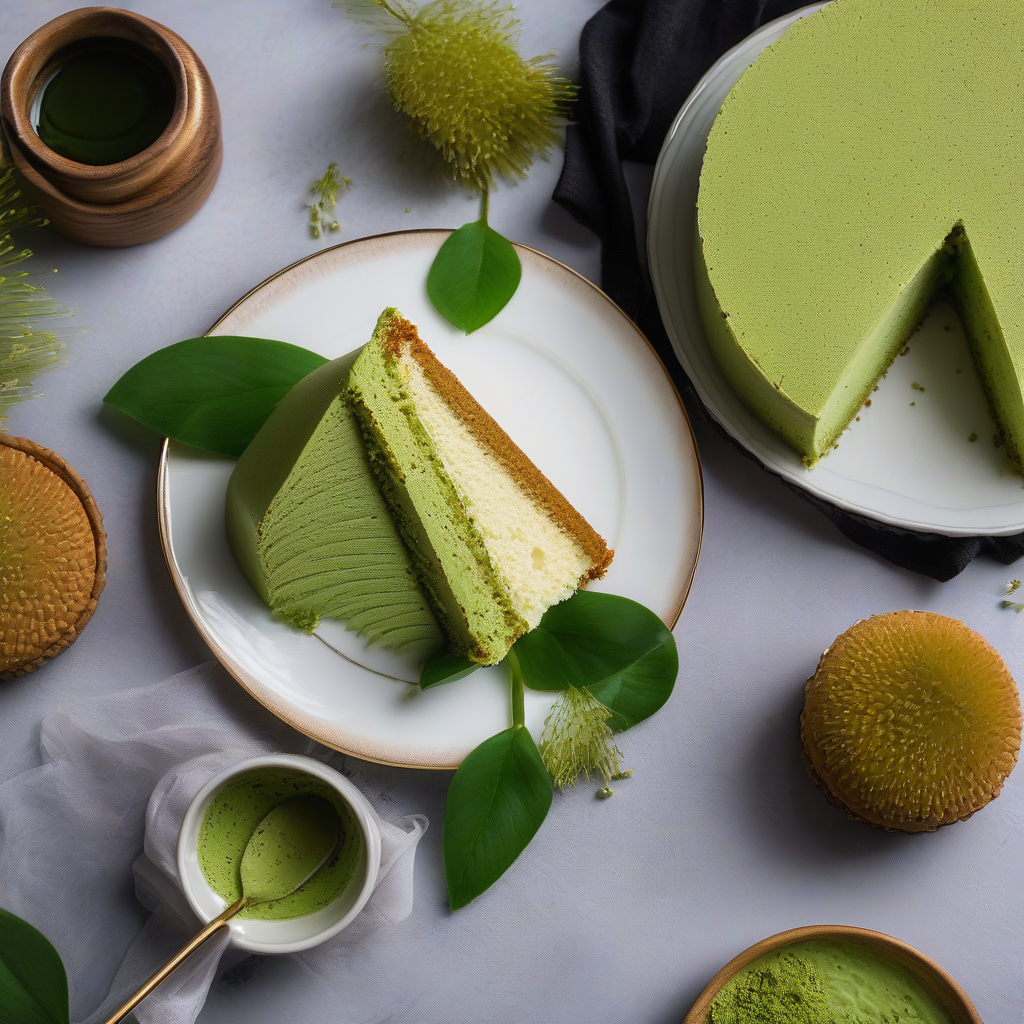 Foto: Just One Cookbook
Bahan-bahan
- 3 large eggs (50 g w/o shell) ((yolks and whites separated))
- 85 g sugar ((½ cup minus 1 Tbsp; divided into thirds))
- 40 ml neutral oil ((3 Tbsp minus 1 tsp))
- ¼ cup water
- 75 g cake flour
- 1 heaping Tbsp matcha (ceremoial or culinary grade) ((1 level Tbsp matcha weighs 6 g))
- 1 tsp baking powder
Langkah-langkah
Before You Start: I highly encourage you to weigh your ingredients using a kitchen scale for this recipe. Click on the “Metric“ button at the top of the recipe to convert the ingredient measurements to metric. If you‘re using a cup measurement, please follow the “fluff and sprinkle“ method: Fluff your flour with a spoon, sprinkle the flour into your measuring cup, and level it off. Otherwise, you may scoop more flour than you need.
Gather all the ingredients. Separate the egg yolks and egg whites from 3 large eggs (50 g w/o shell). Keep the eggs whites in a stand mixer bowl; refrigerate or freeze the bowl and egg whites for 15 minutes until cold. (It‘s okay if the egg whites are partially frozen). Tip: In Japan, we chill the egg whites to make smooth, fine-textured meringue and do not use cream of tartar.
Preheat the oven to 340ºF (170ºC). For a convection oven, reduce the cooking temperature by 25ºF (15ºC). You will need 1 17-cm (7-inch) chiffon cake pan. If you have a different size pan, read this post to adjust the ingredient measurements. Make sure you use an aluminum pan with a removable base (read my blog post for more details). Please see my Notes at the end of this recipe for additional details on ingredients, equipment, and techniques.
Start mixing the batter. In a large bowl, beat the egg yolks and one-third of the 85 g sugar with a hand whisk. Whisk vigorously until it‘s a creamy pale yellow color. Then, add 40 ml neutral oil and ¼ cup water and beat with a whisk to combine.
To a flour sifter or fine-mesh sieve, add 75 g cake flour, 1 heaping Tbsp matcha (ceremoial or culinary grade), and 1 tsp baking powder. Sift one-third of this flour mixture into the egg yolk mixture. Whisk by hand to incorporate the dry ingredients well. Check that there are no lumps in the batter, then sift another one-third of the flour mixture into the bowl. Mix to incorporate. Then, sift in the rest of the flour mixture and whisk until just combined; do not overmix. Make sure there are no lumps in the batter. Set aside while you beat the meringue.
Take out the bowl of egg whites from the refrigerator or freezer. Set the bowl on the stand mixer with a whisk attachment (I used the KitchenAid Professional Series). Start whipping the egg whites on medium-low speed (Speed 4) until the egg whites are bubbly, opaque, and foamy.
Add another one-third of the sugar and continue whisking for 30 seconds. Then, increase the mixer speed to high (Speed 10) and gradually add the remaining sugar in small increments. Beat vigorously until stiff peaks form (see the next step for how to check). It takes about 2 minutes of beating at high speed to reach stiff peaks. Tip: I usually pause beating when the egg whites are almost done. Take off the whisk attachment from the mixer and use it to hand-mix the looser egg whites near the bowl's edge into the stiffer whites near the center until it‘s all homogeneous in texture. Then, put the whisk back on and continue beating.
To check for stiff peaks, pull up your whisk. The meringue in the bowl or on the whisk should be firm enough to hold a peak, pointing straight up (or maybe folding over a little bit just at the very tips). By this time, the meringue should have a glossy texture, too. Tip: If you overbeat the meringue, it will become very stiff and grainy and won‘t incorporate into the batter at all.
Using a spatula or hand whisk, add one-third of the meringue into the batter. Mix well by hand until it‘s homogeneous.
Gently fold in the rest of the meringue in 2 or 3 increments. Take care not to deflate the air bubbles in the meringue and batter as you fold. Once it‘s well combined and homogeneous, fold the batter one last time and scrape the sides and bottom of the bowl to make sure there is no matcha accumulation. The final batter should fall in ribbons when you lift the spatula or whisk.
Prepare 1 ungreased 17-cm (7-inch) chiffon cake pan. From 6–8 inches high, pour the batter into the pan at just one spot to prevent air pockets from forming. While holding the removable base in place, gently tap the pan a few times on the work surface to release any air pockets in the batter. Run a wooden skewer through the batter to release any remaining air pockets.
Put the cake pan on the middle rack of the preheated oven. Bake at 340ºF (170ºC) for 30 minutes. To check if it‘s finished baking, insert a toothpick or wooden skewer into the middle of the cake. If it comes out clean and the top of the cake springs back when gently pressed, it‘s done. Tip: If the top of the cake gets dark too quickly, cover the top loosely with aluminum foil to prevent burning. (The cake may be too close to the heat source.)
Remove the cake pan from the oven and gently drop the pan onto the work surface to shock the cake. This stops the cake from shrinking. To cool the cake, prepare a tall, heavy bottle with a long neck, such as a glass wine bottle. Invert the center tube of the cake pan onto the bottle‘s neck and let the cake cool completely in its pan. Cooling the cake upside down helps it stretch downward and maintain its loft.
Once the cake is completely cool, run a long offset spatula around the outer edge of the pan and a small offset spatula around the inner tube. Gently take out the removable base and cake from the outer pan. Then, run the offset spatula along the bottom of the cake to release it from the base. Tip: I used to use a knife for this step, but the tip of the knife tends to poke the cake while moving around, so I now recommend using offset spatulas.
Invert the cake with the removable base onto a plate or cake stand. The cake will slide off the inner tube. Chiffon cake is served “upside down” with the flat bottom on top.
I serve the Matcha Chiffon Cake as is, but you may dust the top with confectioners‘ sugar, if you‘d like (optional). Slice and enjoy.
I strongly recommend consuming the cake sooner for the best freshness. However, you can keep the cake covered on a plate or stand at room temperature in a cooler place for 1–2 days. To keep it longer, wrap individual slices in plastic wrap or put in an airtight container and store in the refrigerator for 3 days or in the freezer for 2 weeks.
Memuat komentar...