Fukujinzuke buatan sendiri (Acar Jepang untuk Kari)
With crunchy daikon, cucumber, eggplant, and lotus root pickled in a soy sauce-based solution, this Homemade Fukujinzuke is a must-have relish for Japanese curry. Sweet, savory, and tangy, these delicious pickles are easy to make at home.
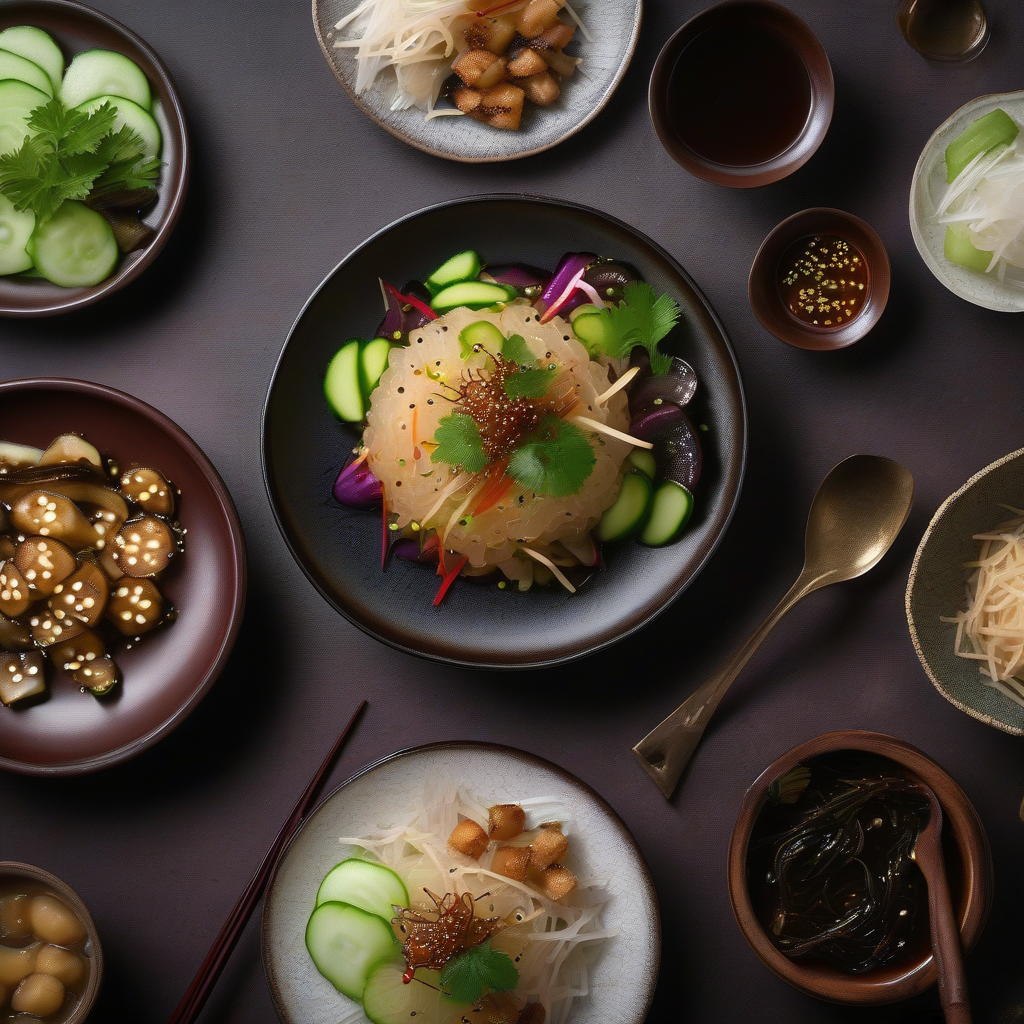 Foto: Just One Cookbook
Bahan-bahan
- 2 inches daikon radish ((9.5 oz, 270 g))
- 2 Japanese or Persian cucumbers ((7.8 oz, 220 g))
- 1 lotus root (renkon) ((boiled; 3.5 oz, 100 g))
- 1 Japanese eggplant ((4.6 oz, 130 g))
- 1 knob young ginger
- 5 shiso leaves (perilla/ooba)
- Diamond Crystal kosher salt
- ½ cup soy sauce
- ½ cup mirin
- 6 Tbsp rice vinegar (unseasoned)
- ½ cup water
- 1 piece kombu ((2 x 2 inches, 5 x 5 cm per piece))
- 6 Tbsp sugar
- ½ Tbsp toasted white sesame seeds
Langkah-langkah
Before You Start: Please note that this recipe requires a marination time of overnight. Now, gather all the ingredients. Also, prepare a kitchen scale to weigh your prepared vegetables so you can calculate the amount of salt you need.
Peel the 2 inches daikon radish. Cut it into quarters lengthwise and slice thinly.
Peel 2 Japanese or Persian cucumbers alternately to give a stripe pattern, then slice thinly.
Cut 1 lotus root (renkon) into quarters lengthwise and slice thinly. I used a packaged, pre-boiled lotus root; if your lotus root is raw, you can quickly blanch it until just tender.
Peel 1 Japanese eggplant. (I recommend peeling the skin completely. If some skin remains, the skin will discolor and the fukujinzuke will not have a good color). Cut the eggplant in half lengthwise and slice thinly.
With a knife or spoon, scrape off the skin of 1 knob young ginger. Cut it into thin slabs and thin julienned strips.
Put an empty large bowl on a kitchen scale and put all the chopped vegetables in the bowl. Check the weight (I have 675 g).
You will need 3% of the total weight of your vegetables in kosher salt. For my 675 g of vegetables, I used 20 g (roughly 2 Tbsp). Calculate and measure the Diamond Crystal kosher salt you need. Sprinkle the measured salt on the vegetables and knead them with your hand. Set aside for 20 minutes.
Combine ½ cup soy sauce, ½ cup mirin, 6 Tbsp rice vinegar (unseasoned), and ½ cup water.
Add 1 piece kombu and 6 Tbsp sugar. Mix well and bring it to a boil.
When it‘s about to boil, remove the kombu (and reserve it to make Simmered Kombu or Homemade Furikake). Turn off the heat and set it aside.
After 20 minutes, put the vegetables into a large sieve (colander) and rinse off the salt under cold running water.
Squeeze the vegetables to drain the water and transfer back to the clean bowl.
Roll up 5 shiso leaves (perilla/ooba) and cut them into thin julienned strips. Add to the squeezed vegetables in the bowl.
Bring the pickling solution to a boil again and add the vegetables.
Add ½ Tbsp toasted white sesame seeds and make sure the vegetables are well submerged. Cook for 30 to 60 seconds. I like to keep my vegetables crunchy, so I usually cook for just 30 seconds.
Drain the vegetables and transfer them to the bowl.
Put any excess liquid in the bowl back into the pot. Over low heat, reduce the pickling solution for 5–10 minutes (so the flavor will intensify).
Transfer the vegetables into airtight jars (I used three 1-cup Weck jars) and add the pickling solution to cover the vegetables. Put the Fukujinzuke in the refrigerator and let it marinate overnight. Enjoy!
You can keep the Fukujinzuke in an airtight container and store it in the refrigerator for up to 5–7 days and in the freezer for a month. Use a clean utensil to take out the portion you will eat. Tsukemono in general is salty, but if you are worried, you can drain the liquid after a day or two. You cannot reuse this to make more Fukujinzuke because the liquid is already diluted with moisture from the vegetables.





Memuat komentar...